
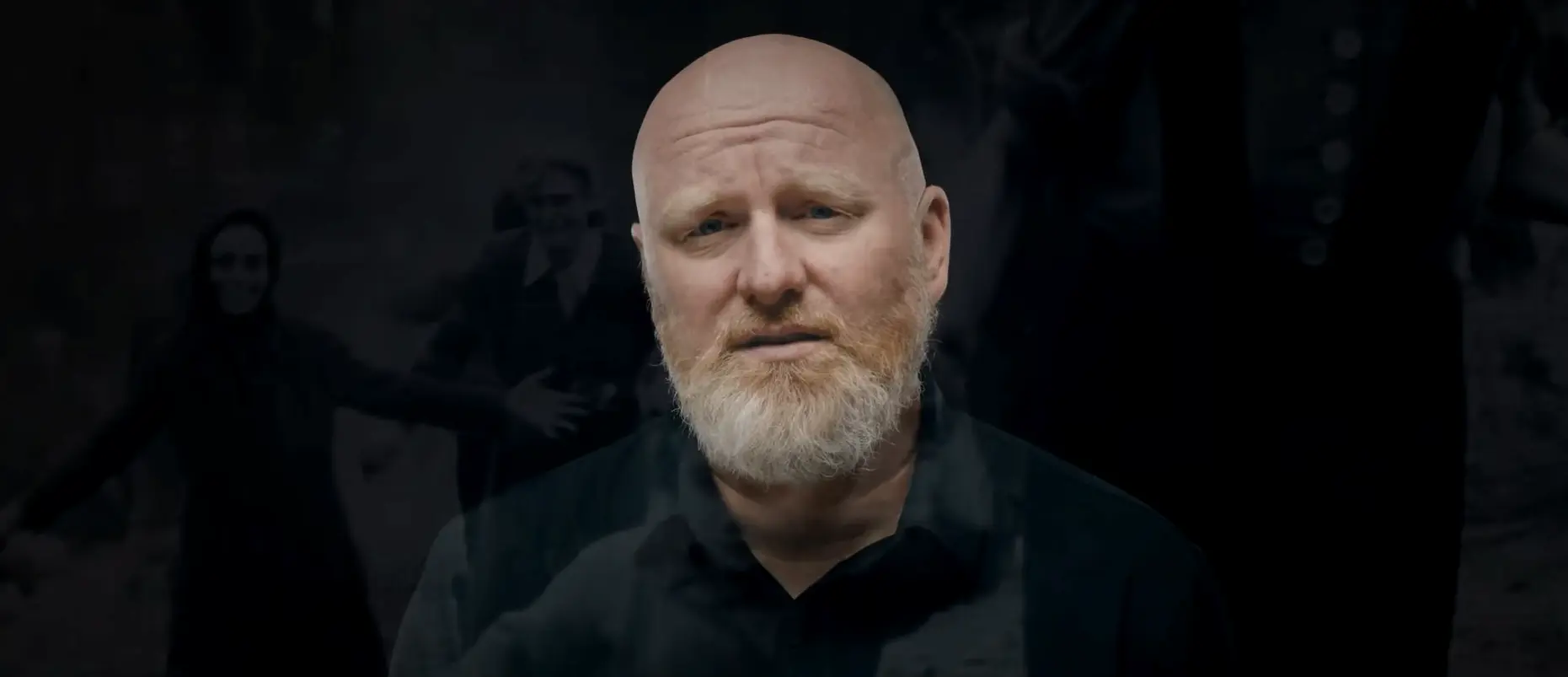
It started with a high school teacher and an old soldier’s forgotten photograph. It ended with one of the most powerful Holocaust stories of the 20th century finally getting the documentary it deserves. A Train Near Magdeburg is not a Hollywood production. It is not a dramatised thriller. It is a true story, captured on film, about 2,500 Jewish prisoners who came within hours of death in April 1945, and the American soldiers who stumbled upon their train and chose to stop. If you are searching for where to watch A Train Near Magdeburg, here is everything you need to know right now.
About A Train Near Magdeburg
A Train Near Magdeburg is a feature-length documentary film based on the bestselling book of the same name by Matthew A. Rozell. The film is based on Matthew Rozell’s book and multiple historical sources, directed by Emmy-winning director Mike Edwards, and scripted by Lee Eric Shackleford.
| Role | Name |
| Director / Producer | Mike Edwards (multiple Emmy winner) |
| Author / Historian | Matthew A. Rozell |
| Scriptwriter | Lee Eric Shackleford |
| Composer | Jim Papoulis |
| Cinematographer | Chris Martin (two-time Emmy winner) |
| Editor / Director of Photography | Josh Fronduti |
| Director of Photography | Joel Hammers |
| Motion Graphics Designer | Shawn Tegtmeier |
| Producer / Production Manager | Tami Jones |
| Art Director | Chris Hutton |
| Story Consultant | David Duncan |
| Production Company | The 5 Stones Group |
| Producing Foundation | The Augusta Chiwy Foundation |
The documentary tells the story of a little-known World War II liberation event. Twenty-five hundred Jewish prisoners from Bergen-Belsen were crammed inside a train, on their way to another concentration camp. On April 13, 1945, in the final weeks of the war, advancing American soldiers came upon the stopped train near Magdeburg, Germany.
The soldiers freed the prisoners but the story was buried for over fifty years. Then a schoolteacher changed everything.
A high school history teacher interviewed one of the tank commanders, who shared not only the story but photographs taken at the liberation. The teacher’s posting of the story went viral. As a result, this story is part of the largest reunification of Holocaust survivors, US liberators, and their families in history.
There have been 11 reunions on three continents, and the story is ongoing and active today. There are an estimated 40,000 to 50,000 people alive today because of the liberation of this train near Magdeburg, Germany.
RELATED: The Flintstones: Bamm-Bamm (2027) – Bedrock’s Next Generation Takes the Stage
Where to watch A Train near Magdeburg?
This is the most important question people are asking right now. Here is the honest answer.
As of September 2026, the production team has a complete cut of the film that is very nearly ready to be shared with the general public. Once final tweaks are accomplished, they will deliver the film to a distributor so they can offer screenings in as many cities as possible. But this distribution depends on funding, and it will not happen until all necessary money is raised.
The team’s goal is to first release the film in 100 American cities, after which they plan to go back to a world-renowned global television streaming platform and to other markets as well.
In short: the film is not yet available to stream or watch at home. A theatrical release is planned, followed by a streaming release, but no confirmed date has been announced.
Here is a summary of the current situation:
| Platform | Availability | Status |
| Theatrical (US cinemas) | Not yet released | Planned for 100+ cities, pending funding |
| Streaming (major platform) | Not yet released | Planned after theatrical run |
| Netflix | Not available | No announcement |
| Amazon Prime Video | Not available | No announcement |
| Disney+ | Not available | No announcement |
| Apple TV+ | Not available | No announcement |
| Vimeo | Partial clips available | Not the full film |
| CBS News app | CBS Sunday Morning segment only | Not the full film |
The best way to stay informed is to subscribe to the newsletter at the official website, magdeburgtrain.com. That is where all release announcements will appear first.
The True Story Behind the Film
To understand why this film matters so deeply, you need to know the history behind it.
April 13, 1945: The Liberation
Three trains were sent from Bergen-Belsen on April 10, 1945, intended for Theresienstadt. One of these trains got as far as Farsleben, near Magdeburg, when US troops freed the prisoners on April 13, 1945. It is estimated that about 2,500 prisoners were aboard this train when it started out on its fateful journey from Bergen-Belsen.
The train consisted of both cattle and passenger cars and contained approximately 2,500 concentration camp inmates, primarily Jewish, including more than 400 children and adolescents. Many of the prisoners died during the transit, and most of the survivors were suffering from severe malnutrition and lack of medical attention.
The soldiers who found the train were members of the 743rd Tank Battalion and the 30th Infantry Division of the US Army. Two tank commanders were central to what happened next: Sergeant George Gross and Sergeant Carrol “Red” Walsh.
On Friday, April 13, 1945, Major Clarence L. Benjamin of the 743rd led a small scouting foray when he came upon some emaciated Finnish soldiers who had escaped from a train full of starving prisoners a short distance away.
Aided by infantrymen and doctors from nearby units, the people from the train made their way to an abandoned hospital several miles away, where at long last they could be properly fed and, if at all possible, have their injuries and diseases treated. American soldiers and doctors saved the lives of thousands of Jews who had been on a literal road to annihilation.
George Gross had a small Kodak camera. He took photographs of the liberated men, women, and children that day. Those photographs would eventually change everything, but not for another 56 years.
The Story That Almost Disappeared
As World War II came to a close, and as the eyewitnesses, Holocaust survivors and the soldiers went on with their lives, the incident at that railroad siding in April 1945 was essentially buried.
The liberators went home. The survivors scattered across the world. The photographs sat in a box.
How Matthew Rozell Found the Story?
High school history teacher Matthew Rozell sat down with 80-year-old former World War II tank commander Carrol Walsh to record an oral history. That interview, in 2001, was part of a class project at Hudson Falls High School in upstate New York. Walsh almost forgot to mention the train.
Rozell and his students began posting interviews they had conducted with World War II veterans on the school’s website. Four years went by, and they heard from a grandmother in a faraway country who had been a seven-year-old girl aboard this train. Then more survivors began to contact them. Today, over 200 survivors have made contact with each other and their liberators through the efforts of this school project.
Now retired from teaching, Rozell says the train story teaches a valuable lesson: “They didn’t have to stop. They didn’t have to help these people. But they did.” He adds there is also a lesson in the value of education: “Here’s a story that very few Americans know anything about, that they should.”
RELATED: Where is Lizzie Borden buried? Real story vs Monster Season 4
Who made a Train Near Magdeburg documentary?
Director: Mike Edwards
Among the Augusta Chiwy Foundation’s remarkable achievements is the documentary “Searching for Augusta: The Forgotten Angel of Bastogne,” which follows the story of the heroic Augusta Chiwy, a Black Belgian nurse who performed life-saving volunteer service in a US Army medical aid station during World War II. As soon as Edwards heard the train near Magdeburg story, he shared Matthew Rozell’s passion for bringing this story to the world.
Edwards won an Emmy in 2015 for his historical documentary “Searching for Augusta.” He started a nonprofit group called The Augusta Chiwy Foundation to make humanitarian documentaries. The foundation has three goals: to reveal inspirational examples of personal courage and leadership; to inspire cultural harmony through positive individual actions; and to preserve stories of individuals whose acts of compassion deserve wider recognition.
Author: Matthew A. Rozell
Matthew Rozell is a retired high school history teacher from Hudson Falls, New York. His book A Train Near Magdeburg has sold over 40,000 copies. He is working on a new book documenting all that has occurred since the original book was published 10 years ago in 2016. His experiences include speaking at the US Holocaust Memorial Museum and meeting with 300 descendants of 11 of the rescued survivors, people who are now alive because of what the soldiers did that day.
How the film Changed: From Series to Feature Documentary
The production went through a significant change of direction.
Emmy-winning director-producer Michael Edwards shifted plans from a four-part series designed for streaming platforms to a two-hour documentary intended for theatrical release. He and screenwriter Lee Shackleford totally reworked the script.
The team’s job became adapting the four episodes of the series into a feature-length documentary to be shown in theatres. Their goal is to first release it in 100 American cities, after which they plan to return to a global television streaming platform and other markets as well.
The reasoning behind this was both practical and artistic. A theatrical release generates audience response, press coverage, and the kind of visibility that makes streaming deals more valuable. It also honours the weight of the story with a cinema experience rather than a background stream on a Tuesday night.
Earlier in the project, ITV was expected to distribute the film as a four-part series. That plan was revised in favour of the standalone feature-length documentary now heading to US theatres.
RELATED: Where to watch Neagley? Is Reacher in Prime Video spinoff?
What makes A Train Near Magdeburg documentary different?
There are many World War II documentaries. Very few of them do what A Train Near Magdeburg does.
Most Holocaust documentaries are built around archival footage and scholarly testimony. This one began as a classroom project. It grew through personal conversations, viral photographs, and emotional reunions spanning three continents. The story itself is not a famous one. You probably did not learn about it in school.
The documentary makes use of historic photos, including one of the most powerful photos taken in the 20th century, and film footage from 1945, as well as interviews with survivors and soldiers.
The segment will include newly discovered photographs from the train rescue, as well as a clip of rare silent film footage discovered in 2023, of soldiers at the train taking care of the rescued prisoners.
That silent film footage is significant. For years, the only visual record of what happened at Farsleben was a handful of photographs taken by George Gross. Discovering moving footage from the same event changed the documentary entirely.
The film also benefits from an unusually large pool of direct testimony. The book on which it is based features testimony from 15 American liberators and over 30 Holocaust survivors. Many of those interviews were conducted by Rozell himself, on camera, before the witnesses passed away.
A Train Near Magdeburg Book
The documentary is based on Rozell’s book, which is available right now in multiple formats.
A Train Near Magdeburg: A Teacher’s Journey into the Holocaust, and the Reuniting of the Survivors and Liberators, 70 Years On features testimony from 15 American liberators and over 30 Holocaust survivors, 73 photographs and illustrations (many never before published), 10 custom maps, and 502 pages with extensive notes and bibliographical references.
| Format | Available From |
| Hardcover | Amazon, Barnes and Noble, Bookshop.org, MatthewRozellBooks.com |
| Trade Paperback | Amazon, Barnes and Noble, Bookshop.org |
| Large Print | Amazon |
| Young Adult edition | Amazon, MatthewRozellBooks.com |
| eBook (Kindle) | Amazon |
| Audiobook | MatthewRozellBooks.com |
| Signed hardcover / paperback | MatthewRozellBooks.com |
The young adult edition is a condensed version designed specifically for school use, in keeping with Rozell’s background as a teacher, the story has always had an educational mission at its heart.
Frequently Asked Questions
Is A Train Near Magdeburg on Netflix?
No. The film is not currently available on Netflix or any other streaming platform. A streaming release is planned after the theatrical run, but no platform or date has been confirmed.
Is A Train Near Magdeburg on Amazon Prime Video?
No. The film is not available on Amazon Prime Video at this time.
Is it on YouTube?
The full film is not on YouTube. A trailer and shorter clips are available on YouTube. A CBS News segment about the documentary is available on the CBS News website.
Is this a fictional movie?
No. A Train Near Magdeburg is a feature-length documentary. It is based on real events from April 13, 1945, and features real testimony from survivors and liberators.
When will A Train Near Magdeburg be released in theatres?
A complete cut of the film exists and is nearly ready for distribution. The theatrical release depends on funding. No specific release date has been announced.
Is the film based on a book?
Yes. It is based on A Train Near Magdeburg by Matthew A. Rozell, published in 2016. The book is available in hardcover, paperback, ebook, and audiobook formats.
How can I support the film?
Donations can be made through the Augusta Chiwy Foundation at augustachiwy.org. You can also subscribe to the newsletter at magdeburgtrain.com to stay updated on the release.
Is A Train Near Magdeburg a PBS documentary?
Early plans included a PBS release. The distribution plan has since shifted to a theatrical release first, followed by a streaming platform release. PBS is not currently listed as the confirmed broadcast partner.
Final Thoughts
A Train Near Magdeburg is not a film that exists because a studio greenlit a project. It exists because a schoolteacher sat down with an old soldier, listened carefully, and refused to let the story disappear. It exists because survivors on three continents found each other through a high school website. It exists because a filmmaker decided this story was worth years of his life to tell correctly.
Rozell puts it simply: “Here’s a story that very few Americans know anything about, that they should. We all say, ‘Never forget. Never forget.’ And it’s a great mantra. It’s very important. But what if we never learned it to begin with?”
The film is coming. It is not available to watch yet. But when it does reach theatres and then streaming platforms, it will be one of the most important documentaries of its kind. Keep an eye on magdeburgtrain.com for the first confirmed screening dates.

- Where to watch Carrie TV Series (2026): Streaming Guide, Episodes and Everything You Need to Know - October 14, 2026
- Verity: Where to Watch, Streaming Release, Cast and Reviews - October 11, 2026
- How to watch General Conference 2026 on YouTube, TV & More - October 4, 2026