You have probably seen the title trending. Maybe a friend texted you about it. Maybe you stumbled across it while scrolling Netflix at midnight, feeling vaguely anxious about the future. Either way, you are here because you want to watch The AI Doc: Or How I Became an Apocaloptimist, and you want to know exactly where to find it.
The short answer: it is on Netflix right now. But there are also several other ways to watch, rent, or buy it, depending on which platform you already use. Here is everything you need to know.
What is The AI Doc: Or How I Became an Apocaloptimist?
The AI Doc: Or How I Became an Apocaloptimist is a 2026 feature documentary about artificial intelligence. It is also, at its core, a film about one man trying to figure out what kind of world he is bringing a child into.
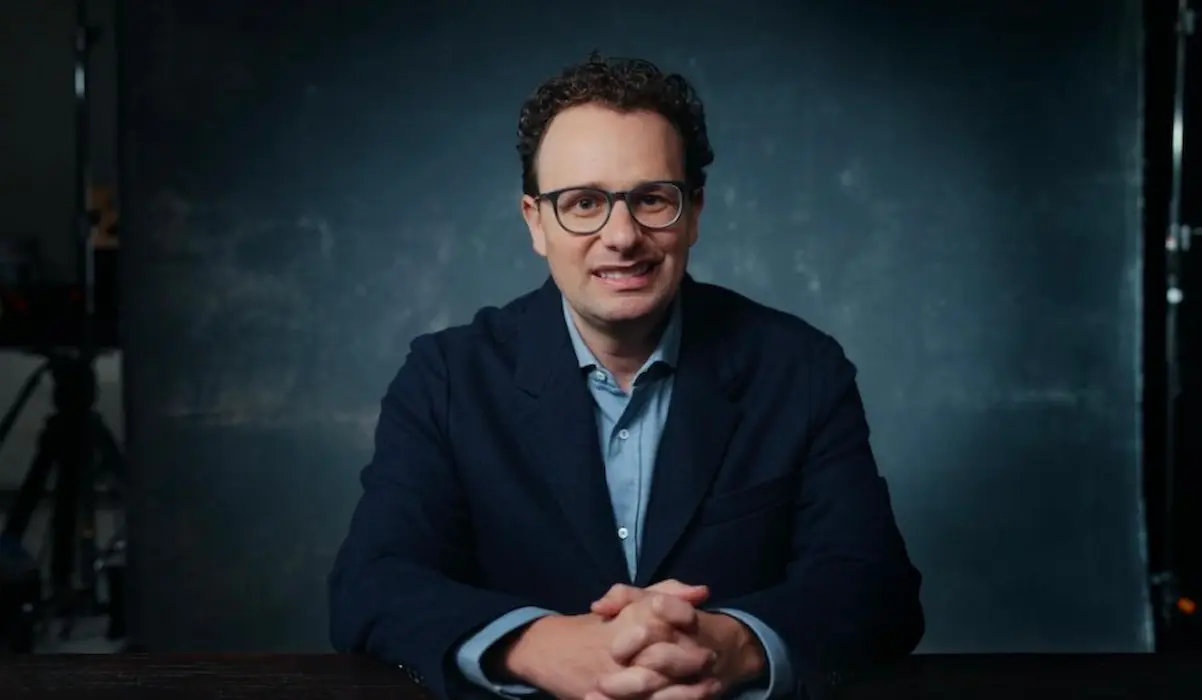
Director Daniel Roher places himself on screen throughout. He is expecting his first child. AI is accelerating faster than anyone can fully track. He decides to build a recording studio in his own home and start asking questions, face to face, to the people who are actually building this technology and the people raising the loudest alarms about it.
Over the course of 104 minutes, Roher interviews more than 40 figures from across the AI landscape. Some of them run the most powerful labs on earth. Others have spent years warning that those labs are moving too fast. The film does not pick a side. Instead, it lands on a concept coined by one of its own interview subjects: apocaloptimism. The idea that you can hold both things at once. The danger is real. A better outcome is still possible. You do not have to choose between dread and denial.
The film carries a PG-13 rating and runs 1 hour 44 minutes.
Where to watch The AI Doc right now?
Here is a full breakdown of every platform currently carrying the film, last verified as of late September 2026.
| Platform | Availability | What You Need |
|---|---|---|
| Netflix | Streaming included | Active Netflix subscription |
| Netflix Standard with Ads | Streaming included | Netflix Standard with Ads plan |
| Peacock Premium | Streaming included | Peacock Premium subscription |
| Amazon Prime Video | Rent or Buy | Pay per view (Prime membership not enough) |
| Apple TV Store | Rent or Buy | Pay per view via Apple account |
| Fandango At Home | Rent or Buy | Fandango account |
| Barnes & Noble | DVD purchase | Physical media |
| Amazon | Blu-ray purchase | Physical media |
Netflix is the easiest entry point. If you already subscribe, the film is available right now at no extra cost. It arrived on Netflix US on September 15, 2026, via a 10-month streaming window.
The Netflix deal came through Focus Features, which is a specialty division under Universal Pictures. Universal has a partial first-window deal with Netflix, which is how the film made the jump from theaters to the platform.
There are currently no free streaming options for the film. If that changes, the notification feature on JustWatch is the best way to track it.
RELATED: Where to watch Resident Evil (2026): Is it streaming anywhere?
Can You Rent or Buy The AI Doc?
Yes. If you do not subscribe to Netflix or Peacock, you can rent or buy the film on Amazon Prime Video, Apple TV, and Fandango At Home. Physical copies on DVD and Blu-ray are also available through Barnes & Noble and Amazon respectively.
Digital rental and purchase access opened on April 15, 2026, following the film’s theatrical run.
The AI Doc Release Timeline
The film had a fairly traditional awards-season-to-streaming journey. Here is every major milestone:
| Date | Milestone |
|---|---|
| January 27, 2026 | World premiere at Sundance Film Festival (Premieres section) |
| Early 2026 | Screened at SXSW |
| March 27, 2026 | US theatrical release via Focus Features |
| April 15, 2026 | Digital rental and purchase available |
| September 15, 2026 | Netflix US streaming debut (10-month window) |
Who is Daniel Roher?
Daniel Roher is a Toronto-born documentary filmmaker. He is, by most measures, one of the most decorated non-fiction directors working today. He is also one of the youngest Oscar winners in documentary history.
His breakthrough came with Navalny (2022), a documentary about Russian opposition leader Alexei Navalny. The film covered Navalny’s survival of a nerve-agent poisoning, his return to Russia, his arrest, and his ongoing fight against the Kremlin. It became a global talking point and went on to win the Academy Award for Best Documentary Feature at the 95th Oscars in March 2023. The film also won a BAFTA.
Before Navalny, Roher directed Once Were Brothers: Robbie Robertson and the Band (2019), a music documentary that opened the Toronto International Film Festival that year.
In 2026, he arrived at Sundance with two films simultaneously: The AI Doc and Tuner, his first narrative fiction feature, starring Dustin Hoffman and Leo Woodall. That double premiere at Sundance made him one of the most-watched filmmakers of the festival.
Here is a quick look at his key work:
| Film | Year | Format | Notable For |
|---|---|---|---|
| Once Were Brothers: Robbie Robertson and the Band | 2019 | Documentary | Opening film, TIFF 2019 |
| Navalny | 2022 | Documentary | Academy Award for Best Documentary Feature (2023) |
| Tuner | 2025 | Fiction Feature | Sundance 2026 premiere, fiction debut |
| The AI Doc: Or How I Became an Apocaloptimist | 2026 | Documentary | Sundance 2026, Netflix Sept 2026 |
The reason Roher is trending specifically right now is timing. The Netflix drop of The AI Doc coincided with a week of heavy global AI policy discussion, which pushed his name back into search trends almost overnight. People who missed the theatrical run in March are discovering it for the first time through Netflix.
RELATED: How to watch Buddy (2026) movie in the US?
Who made The AI Doc?
The AI Doc was co-directed by Daniel Roher and Charlie Tyrell, both Canadian filmmakers. Tyrell, like Roher, was also expecting a child during production. That shared experience of approaching fatherhood while staring into the uncertainty of an AI-shaped future gave the film an unusual dual perspective behind the camera.
The producers brought serious prestige. Daniel Kwan, the Oscar-winning co-director of Everything Everywhere All at Once, produced the film alongside Jonathan Wang, Shane Boris, and Diane Becker. Kwan and Wang produced through their company Playgrounds.
Focus Features handled US theatrical distribution.
Who appears in The AI Doc?
Roher describes the process as building a recording studio in his own home and inviting people in, one by one. He spoke with over 40 figures in total. The guest list spans both sides of the debate, from the heads of the biggest AI labs to the most prominent critics of the industry’s pace.
Here is a look at the key figures who appear in the film:
| Name | Role |
|---|---|
| Sam Altman | CEO, OpenAI |
| Dario Amodei | CEO and Co-Founder, Anthropic |
| Daniela Amodei | President and Co-Founder, Anthropic |
| Demis Hassabis | CEO, Google DeepMind |
| Reid Hoffman | Co-Founder, LinkedIn; venture investor |
| Yuval Noah Harari | Historian and author |
| Tristan Harris | Co-Founder, Center for Humane Technology |
| Yoshua Bengio | Turing Award winner; AI safety advocate |
| Eliezer Yudkowsky | AI risk researcher |
| Ajeya Cotra | AI risk advisor |
| Emily M. Bender | Linguistics professor, University of Washington |
| Timnit Gebru | Founder and Executive Director, DAIR |
| Karen Hao | AI journalist and reporter |
| Peter Diamandis | Founder and Chair, XPRIZE and Singularity University |
| Dan Hendrycks | AI safety researcher |
| Aza Raskin | Co-Founder, Center for Humane Technology |
| Sanmi Koyejo | Assistant Professor of Computer Science, Stanford |
| Deborah Raji | AI accountability researcher |
| Connor Leahy | AI risk researcher |
| Randima Fernando | Former Production Manager, NVIDIA; Co-Founder, Center for Humane Technology |
| Liv Boeree | Game theory expert |
The spread of voices is wide on purpose. Roher did not want a film that simply argued one position. He wanted to hear from the people who are building this technology alongside the people who believe those builders are not moving carefully enough.
One notable near-miss: the filmmakers confirmed in interviews that they came close to securing an interview with Elon Musk, but it did not happen.
What does Apocaloptimist mean?
The word “apocaloptimist” did not exist before this film. It was coined by one of Roher’s interview subjects during production and became the organizing concept of the entire documentary.
An apocaloptimist is someone who holds two things at once. They acknowledge the genuinely catastrophic risks that advanced AI could bring. And they still choose to believe that a good outcome is possible, that the risks can be managed, and that the future is not already written.
Roher arrives at this position by the end of the film. Not because the danger fades. But because the alternative, complete despair, accomplishes nothing. The word is also quietly funny, which fits the tone of the documentary. This is a film that takes the stakes seriously without becoming unwatchable.
Is The AI Doc worth watching?
The critical response has been broadly positive, though not without real disagreement.
| Review Source | Score or Verdict |
|---|---|
| Rotten Tomatoes (Critics) | 88% Certified Fresh |
| Metacritic | 65 out of 100 (Generally Favorable) |
| IMDb | 8.2 out of 10 |
Variety called it a scary, dizzying, and essential documentary. The review praised Roher for having the courage to ask both the smartest and the most basic questions, and to insist they be answered even when he struggled to follow the answers.
Metacritic noted it is disturbing and engrossing, while also acknowledging it does not fully grapple with every moral, political, or philosophical consequence of the AI race, and that it lets some of its most powerful interview subjects off the hook too easily.
Screen Daily offered the sharpest critique. The review compared the film unfavorably to Navalny, arguing that Roher was too willing to accept what his subjects said at face value. Where Navalny had confrontation and intimacy, The AI Doc is softer.
The Globe and Mail called it “algorithmically mushy,” suggesting that the film’s determination to walk the middle road between doom and optimism blunts its impact.
Fox News took a warmer view, describing it as a timely, thought-provoking reality check on the technology dominating the world.
Salon noted that Roher’s motivation is intimately personal, and that the film captures him questioning what kind of world his child will inherit, if any of us have a future at all.
An AI researcher reviewing the film on TMDB noted that the documentary does a great job interviewing prominent AI figures across the full spectrum, from the most pessimistic voices to the most naively optimistic ones, and that the discourse in the film closely matches what those figures say at academic conferences. No sneaky editing, the reviewer concluded.
Audience reaction on Letterboxd and elsewhere has been more divided. Some viewers found the balanced approach thoughtful and necessary. Others wanted the film to push harder, particularly in its conversations with the executives building the technology. The debate about whether the film lets Sam Altman and others off the hook has continued long after its theater run ended.
The short version: if you want an accessible, emotional entry point into the most important technology debate of the era, told through a personal and human story, The AI Doc is essential viewing. If you want sharp investigative journalism or a hard-hitting takedown of the AI industry, you will likely find it too careful.
Either way, it is the rare documentary that people are still actively arguing about weeks after it landed on Netflix. That is probably the most honest recommendation there is.

- Verity: Where to Watch, Streaming Release, Cast and Reviews - October 11, 2026
- How to watch General Conference 2026 on YouTube, TV & More - October 4, 2026
- Where was The Whisper Man filmed? Every Real Location Explained - October 2, 2026