
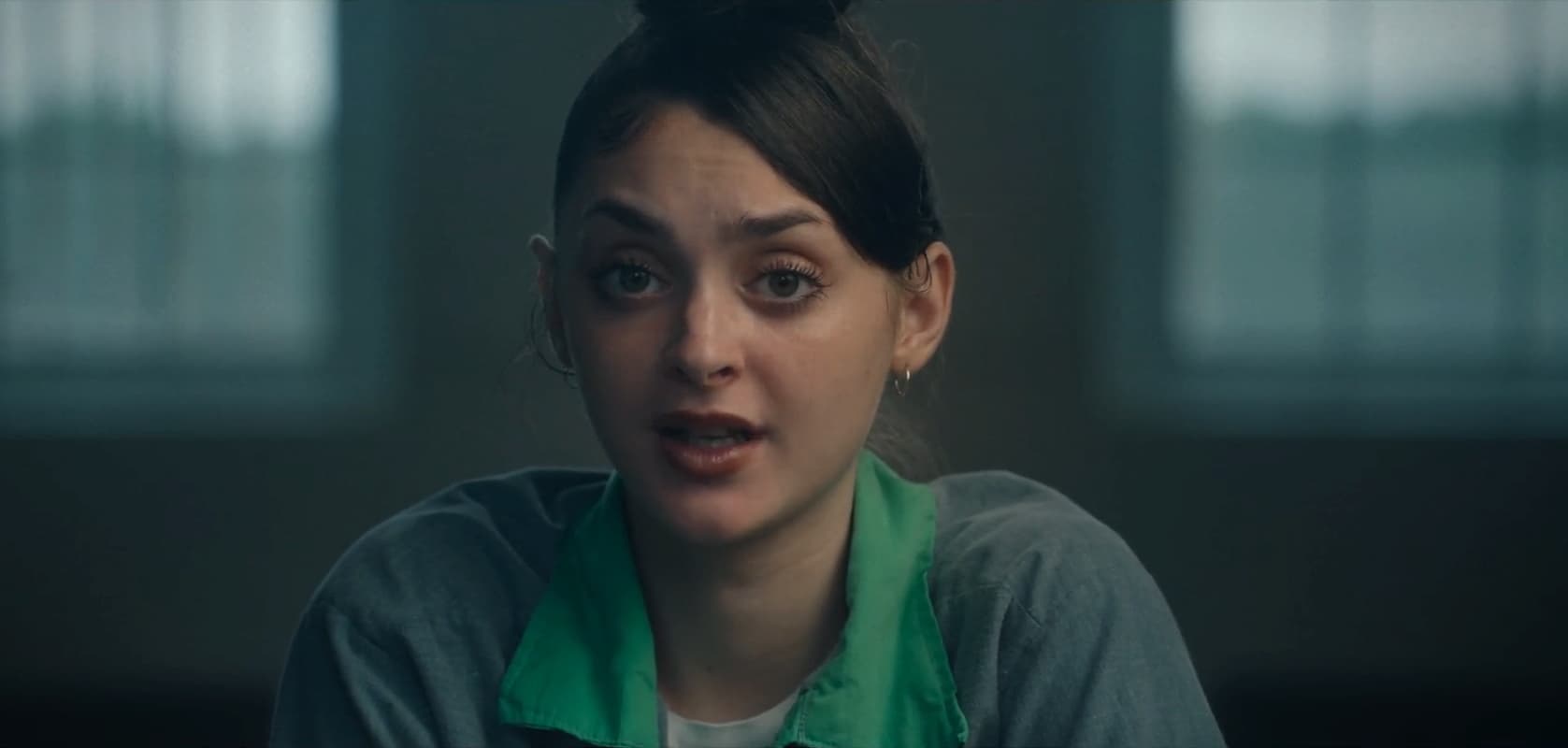
Behind the steel doors of the Ohio Reformatory for Women in Marysville, a 21-year-old woman sits in her cell every single day. She is Mackenzie Shirilla. Her name might not mean much to you, but her story has just shocked millions of Netflix viewers. The documentary titled “The Crash” hit the streaming platform on May 15, 2026, and within days, her name became one of the top three most searched topics across the entire nation. But this is not a story about redemption. This is a story about a car, two deaths, and a mystery that continues to haunt an entire community.
The Weight of Four Minutes
It was 5:30 in the morning on July 31, 2022. The sky over Strongsville, Ohio, was still dark. Mackenzie Shirilla, just seventeen years old, was driving her Toyota Camry through the empty business park. Her boyfriend Dominic Russo sat in the passenger seat. Their friend Davion Flanagan was in the back. None of them knew that they had four minutes left to live.
Witnesses would later describe what happened next as something from a horror film. The car accelerated to exactly 100 miles per hour on a dead-end street. The vehicle showed no signs of slowing down. No squealing brakes. No attempt to swerve. Just one long, unstoppable trajectory toward a brick building. The impact was catastrophic. Russo and Flanagan were pronounced dead at the scene. Shirilla survived but with injuries so severe that her father would later describe them in painful detail on camera. A broken femur. Three broken ribs. Damage to both carotid arteries. Her tricep was actually severed from the bone.
The question that followed was not one of physics or mechanics. It was one of intent. Did Mackenzie Shirilla simply lose control of the car? Or did she deliberately accelerate into that building?
The Investigation That Changed Everything
At first, the police arrived at a simple conclusion. It was a tragic accident. A young driver made a terrible mistake. But then investigators examined the vehicle’s black box data. What they discovered would reshape the entire case.
The data was unforgiving. Mackenzie’s right foot was pressed completely on the accelerator at the moment of impact. The brake pedal had never been touched. There was no mechanical failure. The car had no defects. Every system worked perfectly. This was not a malfunction. This was a choice.
Two weeks before the crash, something else had surfaced. Dominic Russo had called his mother. He told her that Mackenzie was driving erratically and dangerously. He said he needed help. Christine Russo, Dominic’s mother, also received video from her son’s phone. The footage showed Mackenzie being verbally abusive toward Dominic just days before the collision. And there was something even more damning. A friend of Christine’s had overheard Mackenzie say something that would echo through every courtroom and news report that followed. She said she would crash the car.
The prosecutors built their case with methodical precision. They argued that Mackenzie had intentionally accelerated into that building. They said her motivation was simple. Her relationship with Dominic was falling apart. She was angry. Jealous. Out of control. And in a moment of rage, she decided to take him with her.
Also read: Mean Girl Murders: Where to Watch All 3 Seasons in 2026?
The Trial That Divided a Nation
The bench trial took place in August 2023. Judge Nancy Margaret Russo (no relation to the victim) sat in silence as the evidence piled up. When she finally delivered her verdict, her words were stark and unmistakable. She called Mackenzie’s actions “controlled, methodical, deliberate, intentional and purposeful.” The judge said Mackenzie had “chose a course of death and destruction that day.”
On August 31, 2023, Mackenzie Shirilla was sentenced to life in prison. Not one life sentence. Two concurrent sentences of fifteen years to life. The judge acknowledged she could have imposed something even harsher. Mackenzie would not be eligible for parole until September 2037. She would be thirty-four years old at that point. If the parole board denied her, she would spend the rest of her life behind those walls.
The verdict sparked something unexpected. Social media erupted. True crime forums filled with passionate arguments. Some people were absolutely certain she was guilty. Others insisted she was innocent. Still others said the case was too complicated to judge from the outside. The division was real and visceral. Families were split over it. Friends debated it. The case that should have been closed remained open in the court of public opinion.
Her Plea from Prison
For years, Mackenzie Shirilla said nothing. She refused to talk to police. She did not testify at her own trial. She remained silent through every appeal. But something changed when the Netflix filmmakers came calling. Director Gareth Johnson and producer Angharad Scott spent considerable time trying to convince her to speak on camera. Eventually, she agreed.
In that prison interview, conducted with her lawyer present, Mackenzie made a statement that would confuse viewers and infuriate the families of the victims. She said she had no memory of the crash. She claimed she had no intention of killing anyone. “I’m not a monster,” she said into the camera. “I’m not saying I’m innocent, but I was a driver of a tragedy, not a murderer.”
She offered a different version of her relationship with Dominic. She said they argued and made up repeatedly. “We would have probably been married by now,” she told the filmmakers. She acknowledged the overwhelming physical evidence. “There was no intent whatsoever,” she insisted. “I have excessive amounts of remorse for Dominic, Davion, both of their families. This was not intentional.”
Her parents, Natalie and Steve Shirilla, sat in the documentary and defended their daughter. Steve made comments that would later get him placed on administrative leave from his teaching position at Mary Queen of Peace School in Cleveland. He defended his daughter’s marijuana use. He insisted the documentary editors took his words out of context. He and his wife stated they believe Mackenzie is innocent. They claimed the justice system failed their family.
Also read: The Story of Everything (2026): Where to Watch, Cast, Streaming & Everything You Need to Know
The Family Fractured
Dominic Russo’s sister Christine watched the documentary with a broken heart. She participated in it herself, hoping to tell the world about her brother. But what she saw when it aired shattered her. Christine released a statement that cut to the bone. She called Mackenzie a “stone-cold psychopath” and a “psychopath.” She said Mackenzie shows no remorse even from behind bars. She said Mackenzie keeps appealing, keep lying, and keeping the wounds open.
Christine Russo has since launched a podcast. Her goal is to preserve the memories of her brother Dominic and of Davion Flanagan. She wants the world to know who these young men were before they died. Davion was a recent Strongsville High School graduate. Dominic was loyal, caring, funny, and athletic. He was kind. They had futures. They had dreams. They had families who loved them.
Where is Mackenzie Shirilla Now?
Right now, in May 2026, Mackenzie Shirilla is confined to the Ohio Reformatory for Women in Marysville, Ohio. She shares a cell with other inmates. She wakes up every morning knowing she will spend years behind these walls. In the Netflix interview, she described what prison life feels like. “It’s really hard every day in here,” she said. “I try to wake up and be the best person I can be every day, stay out of trouble. There’s not a moment that doesn’t pass where I don’t think about them.”
According to prison records, she is now 21 years old. She maintains a low profile. She stays out of trouble. She has not made headlines for any prison infractions. Some observers have noted that she seems resigned to her fate. Others see her prison behavior as calculated and cold.
The Legal Status: A Door That Remains Locked
After her conviction, Mackenzie’s legal team filed appeal after appeal. Every single one has been rejected. Here is the chronological breakdown of what has happened in the courts.
Case Status Update – Timeline of Appeals and Decisions
| Date | Court | Decision | Description |
|---|---|---|---|
| September 2023 | Cuyahoga County Court | Denied | First post-conviction filing rejected |
| September 2024 | Eighth District Court of Appeals | Upheld conviction | Court found no merit in Shirilla’s claims |
| April 2025 | Ohio Supreme Court | Declined to hear | Court chose not to review the case |
| March 2026 | Eighth District Court of Appeals | Upheld decision again | A new petition was filed one day after the legal deadline, rendering it invalid |
This last rejection carried a cruel irony. Mackenzie’s legal team missed the filing deadline by exactly one day. In the Ohio court system, one day is the difference between hope and despair. One day cost her the chance to present new arguments to a higher court. One day sealed her fate a little tighter.
The Strength of the Evidence
If you are wondering why every court has sided with the prosecution, consider what the investigators uncovered. The evidence is not circumstantial. It is not dependent on witness testimony or interpretation.
The black box data showed that Mackenzie pressed the accelerator to maximum throttle and never touched the brake.
The vehicle had no mechanical defects whatsoever.
Prosecutors recovered psilocybin mushrooms and a digital scale from Shirilla at the scene, suggesting she had been under the influence or dealing drugs.
Video evidence showed her being verbally abusive to Dominic days before the crash.
Witness testimony indicated she had threatened to crash the car.
Phone records and her own behavior immediately after arrest showed a shocking lack of emotion.
Police bodycam footage revealed her making bizarre statements and laughing at inappropriate moments.
When confronted with all of this, the courts have been unanimous in their conclusion. Mackenzie Shirilla pressed that accelerator on purpose. There is no doubt. The only question that remains is why.
Also read: Man on Fire Netflix: Release Date, Cast, Plot, Episodes, and Everything You Need to Know
The Questions that Netflix leaves unanswered
The documentary does excellent work in presenting the facts, but it also leaves viewers wrestling with deeper questions. Was Mackenzie acting out of pure rage and revenge? Was she mentally unstable? Was she so addicted to drama and attention that she did something impulsive and catastrophic? Was she even in her right mind?
Her defense offered one possibility. Mackenzie’s mother testified that her daughter had been diagnosed with POTS, a chronic disorder of the autonomic nervous system that can cause sudden dizziness and fainting. Could she have blacked out behind the wheel? Could that explain why she has no memory of the crash?
The prosecution countered with a simple argument. If she had blacked out, how do you explain the accelerator being pressed to maximum? How do you explain zero brake application? Those are not the actions of someone who has lost consciousness. Those are the actions of someone who is in complete control.
The parole board will eventually have to make a decision. In September 2037, when Mackenzie is thirty-four years old, they will review her case. She will have served fifteen years. She will present herself as a reformed person. She will speak about the remorse she claims to feel. She will ask for a second chance.
The question then becomes this. How do you measure remorse? How do you know if someone is genuinely changed? How do you trust the words of someone convicted of deliberately driving a car into a brick wall at 100 miles per hour?
The Impact on a Community
Strongsville, Ohio, has been marked by this event. The Russo family lost their son. The Flanagan family lost their friend. Everyone at Strongsville High School knew someone affected by this tragedy. The community watched a local case become a national story. They watched it be debated on social media by millions of strangers who never knew Dominic or Davion.
The Netflix documentary has brought that pain back to the surface. For many residents, it felt like a wound being reopened. For others, it was an opportunity to finally tell the world the truth about what happened.
What Netflix does right?
The documentary accomplishes something important. It does not sensationalize the crime. It does not glorify Mackenzie. It presents the facts in a straightforward manner. Director Gareth Johnson and producer Angharad Scott made a conscious choice to center the voices of the families affected by this tragedy.
The victims’ parents speak. The victims’ siblings speak. Mackenzie’s parents speak. Mackenzie herself speaks. The prosecutor explains the evidence. The defense attorney presents her perspective. It is a balanced presentation of a deeply unbalanced act.
The Final Question
As you finish watching “The Crash,” you will be left with a single, inescapable question. You will want to know the truth. You will want to know if Mackenzie Shirilla deliberately killed two young men in a fit of rage, or if she was a victim of circumstance, mental illness, or her own recklessness.
The court has given you an answer. The evidence has given you an answer. But those answers are not always satisfying to everyone. Some people will believe Mackenzie is a cold-blooded killer. Others will see her as a girl who made a terrible mistake and is being punished for the rest of her life. Still others will remain genuinely unsure.
What we know for certain is this. On the morning of July 31, 2022, two young men went to a party. They trusted someone they cared about to drive them home safely. They never made it home. And a girl who was seventeen years old is now locked away, maintaining she did not mean to kill them, while the families of those young men are left with a grief that will never fully heal.
Mackenzie Shirilla is now 21 years old. She is serving a life sentence at the Ohio Reformatory for Women in Marysville, Ohio. She will not see parole until 2037. She has lost every appeal. The courts have rejected every claim of innocence. She spends her days in a prison cell, claiming she never intended for any of this to happen.
Whether you believe her or not depends on what you choose to trust. The evidence. The testimony. The black box data. The video footage. Or the word of a girl who has spent years in silence, maintaining her innocence from behind prison walls.
“The Crash” is now streaming on Netflix. It is a documentary worth watching. It is a case worth understanding. It is a tragedy worth remembering.

- Where to watch Carrie TV Series (2026): Streaming Guide, Episodes and Everything You Need to Know - October 14, 2026
- Verity: Where to Watch, Streaming Release, Cast and Reviews - October 11, 2026
- How to watch General Conference 2026 on YouTube, TV & More - October 4, 2026