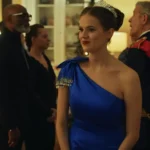

The Love Hypothesis may take place at Stanford University, but Lili Reinhart and Tom Bateman didn’t spend two months filming on the famous California campus.
Instead, the Prime Video romance transformed Montreal, Quebec, into Stanford, using Concordia University and John Abbott College for much of the story. The production also made a trip to California, with the California Institute of Technology providing some of the authentic campus scenery.
So, where was The Love Hypothesis actually filmed? Here’s a complete look at the real locations that brought Olive Smith and Dr. Adam Carlsen’s romance to the screen.
The Love Hypothesis Filming Locations
The Love Hypothesis was filmed primarily in Montreal, Quebec, with Concordia University and John Abbott College standing in for Stanford University. The production also filmed at the California Institute of Technology in Pasadena for authentic California campus shots. Principal photography took place from July 14 to August 29, 2025.
| Location | What it represents |
|---|---|
| Concordia University, Montreal | Main Stanford campus interiors |
| John Abbott College, Sainte-Anne-de-Bellevue | Stanford exterior/establishing shots |
| California Institute of Technology, Pasadena | Authentic California campus footage |
Montreal was transformed into the world of Olive Smith. The city hosted nearly two months of principal photography. Most of what appears on screen originated here: the intimate character moments, the chemistry-building scenes, the slow realization that fake dating might become something real.
This wasn’t an accident. Montreal has become a magnet for prestige streaming romance. Sterling Point filmed there. Off Campus chose Montreal. The Love Hypothesis followed the same pattern. The reason is straightforward: the city offers what California often can’t. It offers flexibility.
Filming at Stanford itself would have been complicated. The university is busy, active, constantly in operation. Allowing a film crew to essentially occupy campus for two months creates logistical nightmares. Permissions become difficult. Scheduling becomes constrained. Production budgets balloon.
Montreal’s Concordia University said yes without those complications. Director Claire Scanlon and her team had access. They had flexibility in scheduling. They could use multiple buildings without constant restrictions. And beyond the access, the economics made sense. Canada’s film tax credit program means every dollar spent in Quebec stretches further than it would in California.
Concordia University, Montreal, Canada
Concordia University became Stanford on screen. Not because it is Stanford, but because it convinced audiences it was. The campus’s modern architecture, spread-out layout, and academic infrastructure provided the right foundation. When Olive walks through hallways studying for her PhD defense, that’s Concordia. When she encounters Adam in his office, same location. When she stares out at the campus wondering about her feelings, still Concordia.

It wasn’t the first time Concordia had hosted a major film or television project. The campus has previous experience with Orphan Black, Off Campus, and various other productions. It knows how to work with crews. It understands scheduling. It recognizes the economic value of film production to the local economy.
The university has also served as a stand-in for corporate offices and government buildings. Its architectural flexibility means it can play multiple roles in the same production year. This track record made it an ideal choice for The Love Hypothesis.
Also check: Where Was Primetime Filmed? Robert Pattinson’s Movie Locations
John Abbott College
About 30 minutes outside Montreal sits John Abbott College in Sainte-Anne-de-Bellevue. It’s smaller than Concordia, quieter, with architecture that leans toward the traditional liberal arts college aesthetic rather than the modern research university that Concordia represents.

This distinction mattered enormously. The Love Hypothesis needed two visual languages to make Stanford feel complete. Concordia provided the interior, contemporary academic experience. John Abbott provided something different: those exterior establishing shots that make a college look classically beautiful. When Olive walks across manicured lawns.
When the camera pulls back to show the physical beauty of campus life. When viewers see ivy-covered buildings and traditional pathways. That was John Abbott.
The Strategic Location Choice
The 30-minute drive between the two locations wasn’t inefficient. It was strategic. Having two distinct campuses allowed cinematographer David Bolen to vary the visual texture. Interior scenes at Concordia feel modern, sleek, contemporary. Exterior establishing shots at John Abbott feel traditional, beautiful, prestigious. Viewers unconsciously register the difference without realizing both locations are in Canada.
This two-location approach is standard practice in Canadian productions. It costs significantly less than finding every interior and exterior at a single location. It saves production time. And when executed with skill—which Scanlon and Bolen clearly exercised—viewers have absolutely no idea the film wasn’t shot at a single campus.
California Provided the Geographic Anchor
The filmmakers knew something essential: they needed at least some genuine California in the film. Not for dialogue scenes or character work, but for the subtle language that tells viewers “this story is set in the Bay Area.” They needed establishing shots that ground the narrative geographically.

So the production traveled to Pasadena and filmed at the California Institute of Technology. Caltech’s campus provided what the film needed: recognizable California architecture that reads as “prestigious research university” to any American viewer. Specific locations including Kerckhoff, Bechtel Mall, and the area around Caltech Hall Pond appear in the film. These are iconic spaces that serve the storytelling without requiring the production to stage the entire shoot in California.
It’s a smart approach that many productions use. A few days of shooting at Caltech provided what might otherwise have required weeks in Palo Alto and Stanford proper. The audience feels the authenticity of California. They see beautiful California campus spaces. They hear California in the filmmaking. But the production avoided the cost, logistics, and complexity of filming in California for months.
Also check: Murder in a Small Town: The Real Canadian Town Behind the Series
Why Caltech and Not the Real Stanford?
Stanford is extremely busy. It’s an active research university constantly in operation. Allowing a film crew to take over campus for location shooting creates disruptions that the institution isn’t eager to accommodate. Permissions are difficult. Scheduling is constrained. Filming there would have required either extensive negotiations or scaling back the production’s creative vision.
Caltech proved more cooperative. The institution understood what the production needed and worked with the filmmakers rather than against them. Plus, Caltech’s campus reads equally well on screen as Stanford. To most viewers, prestigious California campuses have similar architectural DNA. The details matter less than the overall impression of a world-class research institution. Caltech delivered that impression.
Palo Alto, Stanford’s surrounding city, may have also contributed location shots. The area’s streetscapes and geography can provide authenticity without requiring full campus access. But the core California location work happened at Caltech and served the film’s purposes completely.
The Cast Assembled in Montreal and Created Chemistry
Lili Reinhart, known for her five-season run as Betty Cooper on Riverdale, stepped into Olive Smith with intelligence and self-aware humor that immediately made sense to anyone familiar with Ali Hazelwood’s novel. Reinhart is capable of playing characters who are brilliant, funny about their own romantic disasters, and ultimately sympathetic even when they’re making questionable decisions.
Tom Bateman brought something unexpected to Dr. Adam Carlsen. The tension between his actual warmth and Olive’s perception of him as unapproachable creates a dynamic that works beautifully.
Bateman has spoken about how he and Reinhart prepared. They met in Montreal before principal photography even began. They worked through scenes together. They discussed the characters’ dynamics. They built genuine rapport. This preparation made an enormous difference in what appears on screen. Chemistry between actors either exists or it doesn’t, but preparation amplifies what’s there.
Who’s in the cast of Love Hypothesis?
| Character | Actor | Background |
| Olive Smith | Lili Reinhart | Riverdale, Hustlers, The Godmother |
| Dr. Adam Carlsen | Tom Bateman | Murder on the Orient Express, Behind Her Eyes, Based on a True Story |
| Anh (Olive’s Best Friend) | Rachel Marsh | The Morning Show, Whirlybird |
| Jeremy (Olive’s Crush) | Nicholas Duvernay | The White Lotus, Not Suitable for Work |
| Malcolm (Friend/Comic Relief) | Jaboukie Young-White | Abbott Elementary, SNL, Dating and New York |
| Tom | Arty Froushan | Daredevil: Born Again, The Woman King |
The supporting cast elevated the entire production. Rachel Marsh brought genuine warmth to Anh, making her more than just “the best friend” character. Nicholas Duvernay made Jeremy sympathetic despite being the obstacle that sets the entire plot in motion. Jaboukie Young-White provided comic relief as Malcolm without ever tipping into pure caricature or undermining the film’s emotional stakes.
Behind the Scenes: How The Love Hypothesis Got Made
Claire Scanlon directing her first narrative feature film was a bold choice by Amazon MGM Studios. Scanlon’s background is in television. She’s worked on Brooklyn Nine-Nine as a director and executive producer. She’s been integral to the success of Abbott Elementary. She knows comedy. She understands ensemble dynamics. She can work with actors in ways that make them feel safe and creative.
But a feature film is different from television. The pacing is different. The emotional architecture is different. The visual storytelling requires a different approach. Scanlon rose to the challenge. She brought cinematographer David Bolen, who understood her visual language. She brought composer Ari Balouzian to score the emotional beats. Editor Daniel Garber assembled the film’s final form. This team made decisions that honored the source material while making something that works specifically as a film.
The Novel Had an Unusual Origin Story
Before The Love Hypothesis became a New York Times bestseller with over 750,000 copies sold worldwide, Ali Hazelwood wrote it as Star Wars fanfiction. The original featured Rey and Kylo Ren. This origin story matters because it meant the book arrived with built-in fan infrastructure. People who discovered the story online through fanfiction channels were devoted. When Hazelwood published it as an original novel, those fans came along. BookTok discovered it later and amplified it further.
By the time Amazon announced the film adaptation, expectations were stratospheric. Fans had experienced the story as fanfiction. They’d embraced it as a published novel. They’d shared it obsessively online. Now they had to watch actors bring Olive and Adam to life. It was simultaneously exciting and terrifying for the fanbase.
Lili Reinhart also took a producer credit on the film, signaling her investment in getting the story right beyond just her performance. Producer involvement at the actor level often indicates someone cares deeply about the material and wants creative input.
The Film Is Rated R, Which Matters
Unlike many streaming rom-coms that play it safe with PG-13 sensibilities, The Love Hypothesis earned an R rating. This allowed Scanlon to include moments that felt authentic to adult life. Some of the steamier scenes from the novel made it to screen. The language could be more colorful. Situations could feel more realistic.
For fans who worried the adaptation might sanitize Hazelwood’s work, the R-rating was reassuring. It suggested the filmmakers trusted their audience to handle mature content.
Also read: Where and When to Watch The Love Hypothesis
The Critical and Fan Response was Overwhelmingly Positive
Critics praised the ensemble cast. They noted that Reinhart and Bateman possessed genuine chemistry, the kind that can’t be manufactured or faked. Several reviewers called out Skyler Gisondo, confirmed late in the casting process, as a surprising standout performance.
Most importantly, BookTok approved. Readers of the novel acknowledged that Scanlon and her team had done the source material justice. The filmmakers had made smart creative choices. They’d adapted the story rather than simply transcribing it. The film had its own voice while honoring what made the novel beloved by so many readers.
Critical Reception Breakdown
| Aspect | Critical Reception | Audience Reception |
| Casting Choices | Praised as inspired and well-considered | Fans embraced Reinhart and Bateman enthusiastically |
| Chemistry Between Leads | Called authentic and slow-burn in the best way | Audience felt the genuine connection |
| Adaptation Approach | Commended for honoring source material while being cinematic | Book readers approved of creative decisions |
| Direction | Scanlon praised for confident filmmaking | Audiences felt emotionally invested throughout |
| Production Design | Noted as surprisingly high-quality for streaming | Audiences felt transported into the world |
The critical consensus is clear: The Love Hypothesis is a successful streaming adaptation. It works for people who love the novel. It works for people discovering the story for the first time. It works as a film, not just as a novelization with actors.
Montreal’s Rise as the Prestige Streaming Romance Capital
The Love Hypothesis is part of a larger trend that’s been building for years. Montreal has positioned itself as the go-to location for contemporary streaming romance and drama. Off Campus filmed there. Sterling Point chose Montreal. Now The Love Hypothesis calls it home.
This isn’t coincidence or accident. Montreal offers everything productions need: generous tax incentives, experienced crews, diverse architecture, modern facilities, and most importantly, institutional willingness to work with filmmakers rather than against them.
Plus, Montreal’s visual variety means a single city can convincingly double for multiple American locations. The French Quarter architecture. The modern downtown. The suburban neighborhoods. The industrial areas. It’s all there within one city. For American productions wanting urban sophistication without the premium costs of filming on either coast, Montreal has become essential.
Frequently Asked Questions
Why film in Montreal instead of Stanford?
Logistics and economics. Filming at an active research university like Stanford requires extensive permissions and creates operational disruptions. Montreal offered better access, more schedule flexibility, and significant tax incentives. The production could maximize its budget while actually making a superior schedule work.
Can fans actually visit these filming locations?
Yes. Concordia University is open to public visitors during campus hours. You can walk through buildings that appear in the film. John Abbott College also welcomes campus visitors, though you should respect classes and campus operations. It’s become an actual pilgrimage destination for fans of both the film and the book.
Is the film faithful to the book?
Mostly, yes. Director Scanlon and screenwriter Sarah Rothschild made smart creative adaptations. Some supporting characters were adjusted. A few subplots were streamlined. But the heart of the story—Olive and Adam, their fake dating arrangement, the realization that it’s becoming real—remains intact and true to the source material. Fans have appreciated the choices made.
Did Lili Reinhart and Tom Bateman actually have chemistry?
Multiple reviewers highlighted their chemistry as the film’s greatest strength. The slow burn works because you genuinely believe both in their pretense and in the real feelings developing underneath. This level of authentic chemistry can’t be faked, and evidence throughout production and promotion suggests Reinhart and Bateman brought genuine ease and comfort to their scenes together.
Will there be a sequel of The Love Hypothesis?
Ali Hazelwood has written other books that expand the universe of The Love Hypothesis. Characters return in subsequent novels. If The Love Hypothesis performs well on Prime Video and early indications suggest it will, sequels or spin-offs are certainly possible. But nothing has been officially announced. The first film needed to succeed before anyone started planning what comes next.
The Real Story is about smart filmmaking
The Love Hypothesis succeeds not because it filmed at Stanford, but because it found a creative solution to filming a Stanford story without actually being there. Director Claire Scanlon understood something essential: audiences don’t care where a film is shot if it tells a good story. They care about character. They care about chemistry. They care about emotional authenticity.
She focused on those elements and used locations to support them rather than define them. Montreal portions created the intimate, character-driven scenes that make the film work.
Smart choices. Efficient production. Respect for both the source material and the audience. The Love Hypothesis is all of those things, wrapped up in a romance that genuinely makes you believe in Olive and Adam.
And if you find yourself in Montreal someday, you know exactly where to go for your own location scout.

- Where was Love of Your Life (2026) filmed? All Real Locations Explored - October 16, 2026
- Where was Animals (2026) filmed? Real Locations Behind the Netflix Thriller - October 15, 2026
- Where was The Spirit of Halloween (2026) filmed? Hallmark Cast Details - October 9, 2026