
Few classic adventure films look as grand and authentic as Mutiny on the Bounty (1962). Starring Marlon Brando as the rebellious Fletcher Christian and Trevor Howard as the iron-fisted Captain Bligh, the film is remembered not just for its performances, but also for its breathtaking island scenery.
But where was Mutiny on the Bounty actually filmed? Was the story true? And what really happened to the mutineers after they fled? Let’s break it all down.
Mutiny on the Bounty Filming Locations
Although the real HMS Bounty sailed across the Pacific, the 1962 film was primarily shot in French Polynesia, with Tahiti serving as the main filming location.
Tahiti, French Polynesia
Tahiti stood in for the lush South Pacific paradise depicted in the movie. Many of the film’s most memorable scenes including life ashore before the mutiny were shot directly on location.
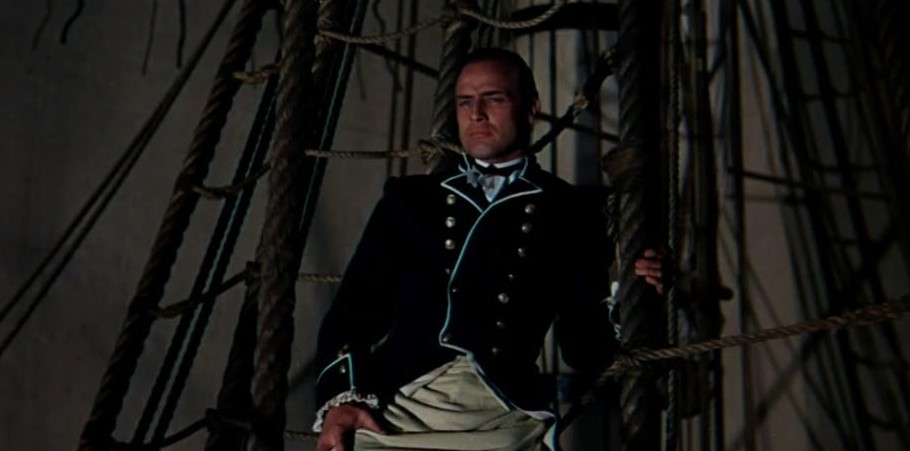
Director Lewis Milestone and later Carol Reed (who took over during production) wanted authenticity, and Tahiti delivered. The island’s natural beauty played a huge role in shaping the romanticized image of island life that ultimately motivates the mutiny in the film.
Moorea
The island was used for the wide landscape shots and the scenic background.
Hollywood Soundstages
Used for the interior ship scenes and the controlled sequences. A full-scale replica of The Bounty was built for the film. The replica was a box office attraction and sailed the pacific during the filming. The location filming and real-world sailing were groundbreaking for the time, but caused massive delays and budget overruns.
RELATED: Where was Outlaw Posse filmed? See All Western Locations
How long did the mutineers survive on Pitcairn Island?
The mutineers, Flecther Christian and others, sailed to one of the World’s most remote island, Pitcairn, after the mutiny in 1789. They did not just survive, they have descendants that live on Pitcairn Island even today.
The Historical Account of the Pitcairn Island Community
The Bounty mutineers arrived on Pitcairn Island in 1790 after having burned the Bounty to avoid detection by the British Navy. The Pitcairn community’s first years were characterized by violence and destabilization due to internal conflicts. However, with the subsequent arrival of Polynesians, the community began to regularly intermarry and stabilize.
The Polynesians, along with the Bounty mutineers, were able to establish Pitcairn Island as a permanent settlement, defying the internal violence, diseases, and other challenges faced by the community. Present day Pitcairn is home to a few residents, many of whom are descendants of the Bounty intermarriage mutineers.
RELATED: Where was Tommy Boy filmed? 1995 Movie Locations and Cast
Were there really mutineers on the bounty?
There were intermarrying mutineers on Pitcairn Island and also intermarrying Polynesians.
The Real Mutiny
The mutiny occurred on April 28, 1789, lead by Fletcher Christian against Captain William Bligh. Bligh along with several other loyal crew members were cast adrift in a small boat Moses-style into the open sea.
Miraculously, Bligh survived and navigated over 3,600 miles. Historians also cite the peripheral violence surrounding the mutiny, especially the violence perpetrated by Bligh and the “real” violence, as constitutive of the mutiny.
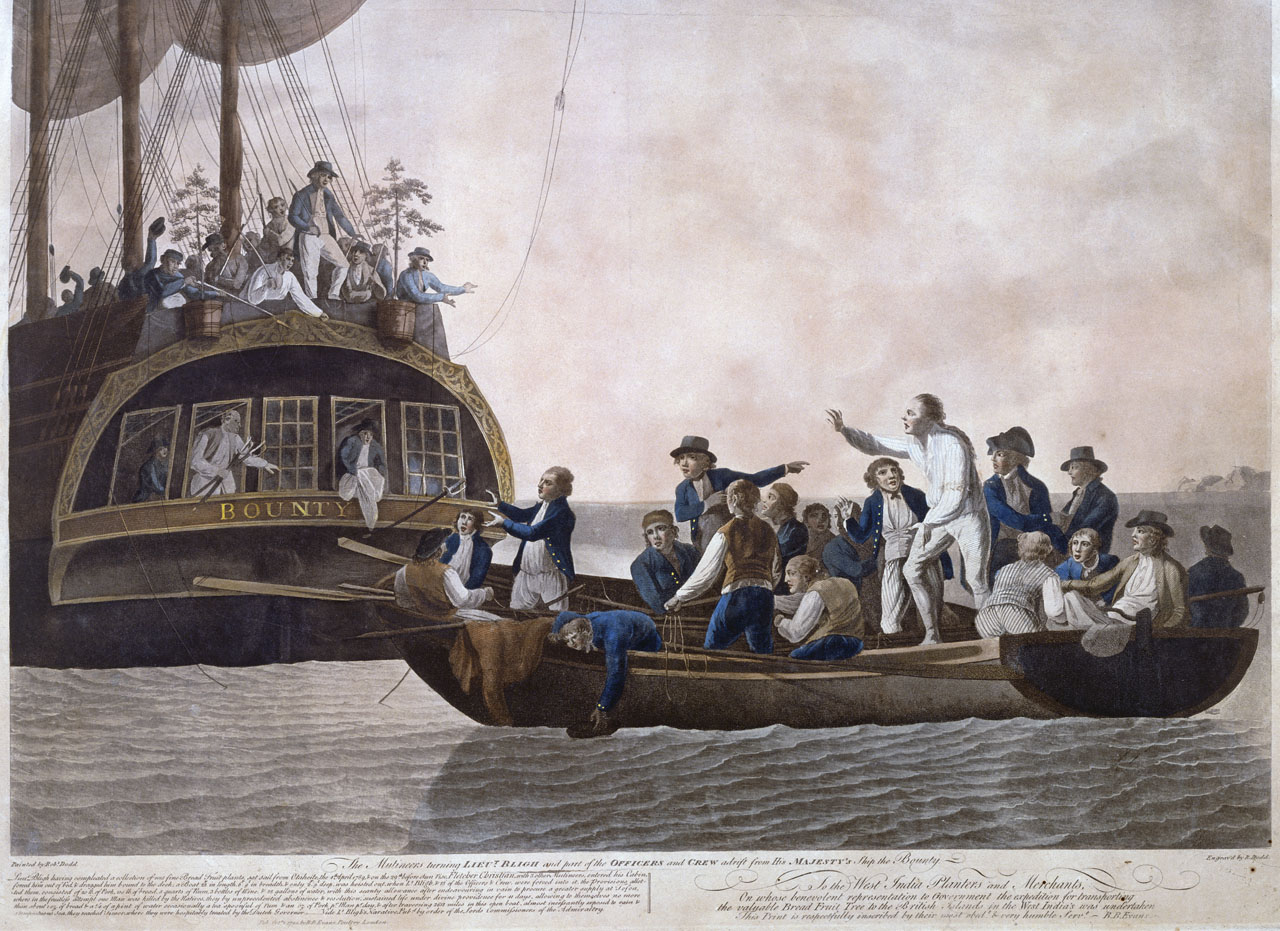
In the 1962 rendition of the mutiny, Bligh is portrayed as extremely and unjustly cruel, while Christian is characterized as the unjustly reluctant hero. While many regarded Blighs strict behavior as cruel, the “real” situation was more complex. The “real” situation, many historians tels us, was in and of itself chaotic to the level of dictated personality.
Many of the extreme simplifying dramatization “sympathetic” representations were largely a consequence of a perceived need for the dramatization of the individuals to some extreme besides a lack of strict behavior on the other individuals involved.
There was a need for strict behavior over the dramatization of the personality and a need for chaotic The mutiny, as represented in the 1962 movie, sought to focus or center itself around rational behavior rather than the center of dramatized dehumanization of the circumstances or characters with extreme personality simplification.
The extreme dramatization of the characters lead, for many historians to cite the centripetal violence surrounding Bligh and the relational violence present in the mutiny itself, as components of established order surrounding the mutiny.
RELATED: Where was Open Range filmed? Review, Cast, Filming Locations
Which American town was used in the shooting of the Mutiny on the Bounty (1962)?
With Tom Hanks and Robin Wright in the lead roles, the movie was primarily filmed in Los Angeles, California, with digital soundstages to replicate locations for the time periods they needed.
It has no connection, either filming-wise or story-wise, to Mutiny on the Bounty or its Pacific island locations. The only reason for the confusion is overlapping search trends instead of actual correlations on details regarding the productions.
Why the filming locations still matter?
Visually, the 1962 Mutiny on the Bounty is an iconic film and must watch because it used real filming locations and didn’t rely on studios when filming in Tahiti. The film, even decades later, is still used to show and describe the South Pacific, Pitcairn Island and the voyage of the Bounty.
When watching the film, the audience will see an endless ocean, countless islands and feel the promise of adventure. It is a film that is used to describe the essence of the South Pacific.
Regardless of watching the movie for the tale, the views, or Marlon Brando’s truly memorable role, the movie Mutiny on the Bounty still stands as an icon of a cinematic adventure – and an interesting entrance to one of the most enthralling real stories ever presented to the screen.

- Where Was Yellowjackets Season 4 Filmed? Inside Vancouver’s Dark Forest Locations & Final Season Secrets - March 28, 2026
- The Young and the Restless Recap (March 27): Cane Dumps Lily After Shocking Betrayal, Nikki Plots Against Victor - March 27, 2026
- The Young and the Restless Recap (March 26): Victor Shocks Lily, Jack Declares War & Diane Faces Explosive Showdown - March 26, 2026